
“AI soon won’t be a feature anymore, like electricity is not a feature anymore.”
Seth Godin
This quote has been rattling around in my mind lately. We’re rapidly approaching a world where AI isn’t special, but standard. Expected. Invisible infrastructure.
I’ve been wrestling with a question: If everyone has access to the same AI tools, and most use them in similar ways, are we actually getting smarter? Or are we simply raising the collective floor while maintaining the same relative distances between us?
It reminds me of when calculators became commonplace. Initially, using one gave you an edge. Now? It’s just table stakes.
So what separates average AI usage from exceptional AI usage?
AI is just a tool to amplify our existing habits and make us smarter and more effective as humans. But the core elements that drive human effectiveness remain unchanged. We are, after all, the product of the last 2,000 years—remarkably resilient and adept at connecting the dots. I believe that the true potential lies in combining this innovative technology with classic wisdom. This partnership will propel us forward.
From what I’ve observed, it comes down to three approaches:
1. Cultivating deeper human inquiry Long before AI, philosophers understood that “the quality of our questions shapes the quality of our lives.” While AI responds to prompts, humans respond to meaning. The most profound advantage comes not from technical prompting skills but from our uniquely human capacity to ask questions that matter. Those who bring their full humanity to their AI interactions, who connect technological outputs to life’s fundamental questions, extract value that transcends mere information gathering. The questions we ask AI reflect our human priorities, curiosities, and wisdom.
2. Consistency and discipline Knowing exactly what to do doesn’t guarantee we’ll actually do it. Often, we fail to consistently execute what we know we should due to very human things: fear, mental fatigue, or a lack of motivation. Simple things like building habits can be a struggle. AI can assist with this, but it also requires patience and self-awareness. Understanding your own mind and how to best utilize it is, in my opinion, the hardest part.
3. Personalizing AI to your authentic self You also need to figure out how to use it in a way that better fits your personality. Instead of asking imaginary questions and getting answers from the world’s most brilliant minds, why not teach it to think more like people who share your way of thinking, personality, values, history, and point of view? It’ll be more effective because you’ll be able to work through the message you want to convey and add to what I’m saying.
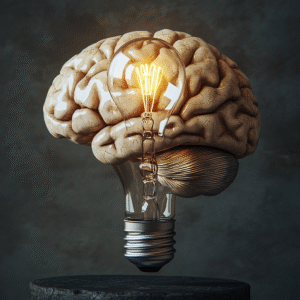
I’m curious: How are you using AI in ways that genuinely make you better, not just faster? What approaches have you found that go beyond the obvious applications?
Because in a world where AI becomes as unremarkable as electricity, the competitive edge won’t come from having access to the technology. It will come from how thoughtfully we integrate it into our work and thinking.